Training science
Does Dry Fire Training Actually Work? What the Research Shows
By Matt Burkett · Published · Updated · 3 min read
Short answer
Yes, with limits. In an Army study of 186 soldiers, laser dry-fire scores predicted first-run live-fire qualification (r = .50), and a military police study found dry fire significantly improved qualification scores for active-duty MPs. Dry fire builds gun handling, sight picture and trigger control. It can't teach recoil management, so mix it with live fire.
Key takeaways
- Dry fire works best for draws, sight picture, trigger press, transitions and reloads.
- Military research links laser dry-fire scores and dry fire practice to live-fire results.
- Unstructured dry fire without feedback can fail. Timers and scoring make the difference.
- It can't replace recoil, follow-through under recoil or real malfunctions. Pair it with live fire.
- Safety first: no ammunition in the room, every time.
What is dry fire training?
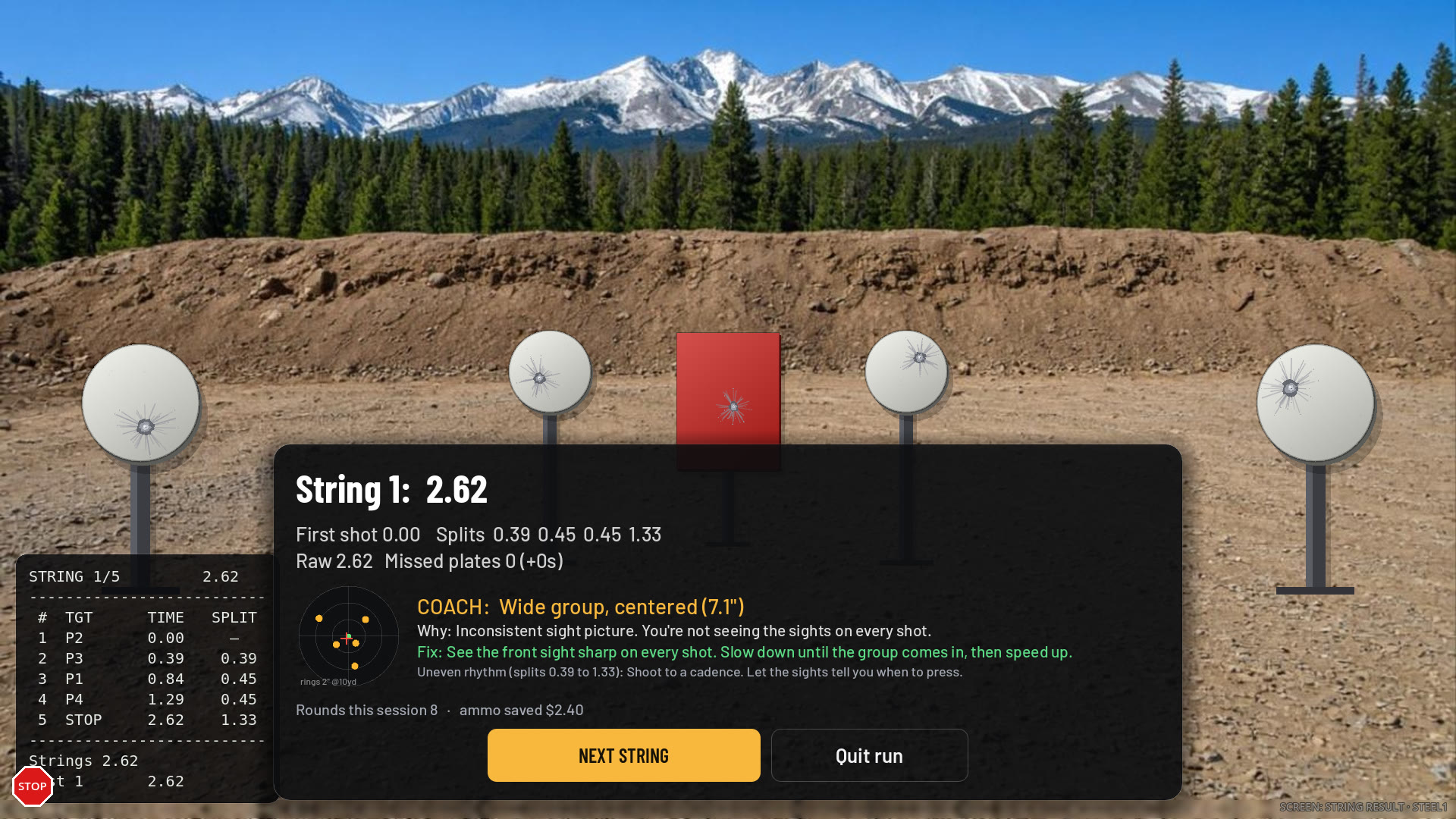
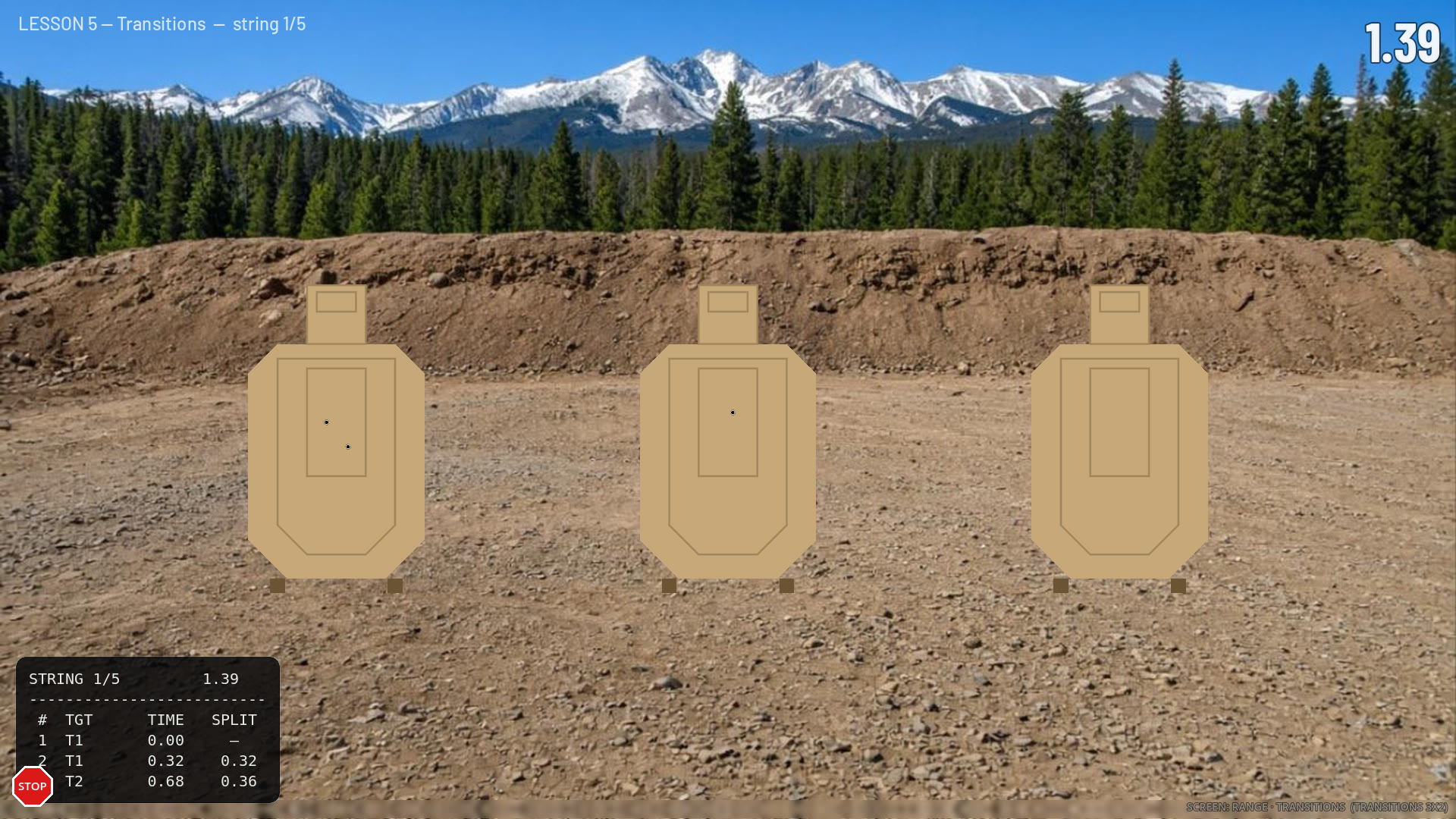
Dry fire is practicing with an unloaded gun: drawing, aiming, pressing the trigger and reloading without firing a round. Add a laser trainer or light gun and dry fire software, and every trigger press becomes a scored shot with real time and splits.
What does the research say about dry fire?
Most of the hard data comes from military marksmanship research.
- Laser dry fire predicts live fire. An Army Research Institute study of 186 Reserve Component soldiers found statistically significant relationships between laser marksmanship-trainer scores and first-run live-fire qualification. Dry-fire mode scores correlated at r = .50, and the authors recommended the dry-fire version as the predictor.[1]
- Dry fire improved qualification. A study of military police compared dry fire, a simulator, live fire and extra live fire. For active-duty MPs, only the dry fire and extra-live-fire conditions significantly improved qualification scores. For reserve MPs, all four conditions were equally effective.[2]
- Militaries keep investing in it. The U.S. Navy and Australian Defence Force have both studied indoor simulators and dry fire as ways to keep perishable marksmanship skills sharp when range time is scarce.[3][4]
When does dry fire fail?
Not every result is positive. In an informal mini-study, a training company had staff do dry fire between live-fire tests and saw no improvement. The authors concluded they needed a better protocol.[5]
That's the lesson. Dry fire isn't magic. Reps without a standard, a timer or feedback can just as easily build bad habits as good ones.
What can dry fire train, and what can't it?
Dry fire builds:
- The draw, from concealment or a competition holster
- Sight picture and sight alignment
- Trigger press without disturbing the sights
- Target transitions and stopping the gun on target
- Reloads and movement into position
Dry fire can't build:
- Recoil management and tracking the sights through recoil
- Real follow-through under recoil
- Clearing real malfunctions with live ammunition
- Shooting with live-fire noise and blast
How do you make dry fire practice actually count?
- Have a standard. Pick a drill, a par time or a points goal before you start.
- Get feedback on every rep. A shot timer, hit location and splits tell you the truth.
- Keep it short and frequent. Focused sessions beat marathon sessions.
- Track it over time. Log your times so you can see progress, not just feel it.
- Prove it live. Take your dry fire numbers to the range and check them.
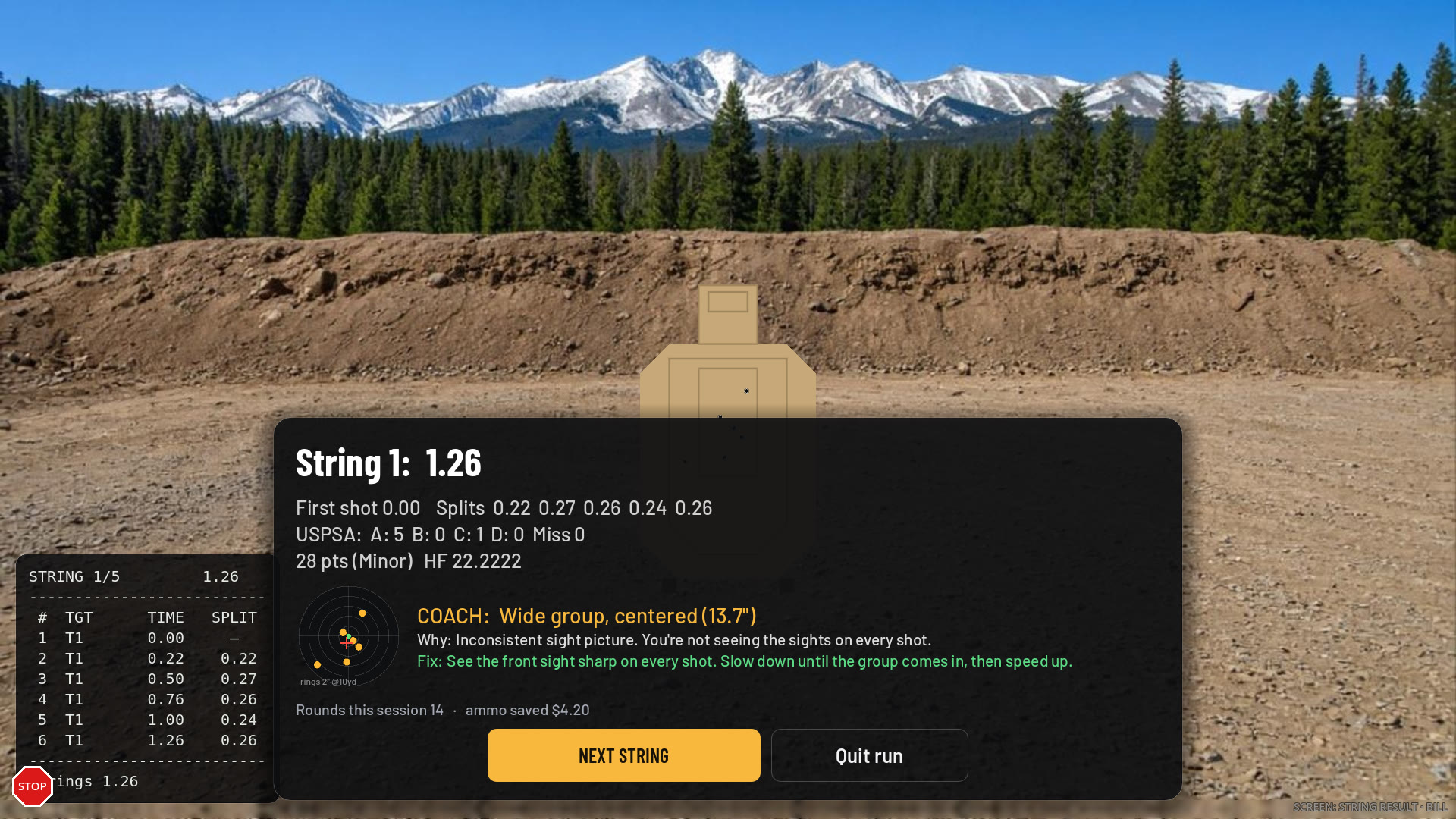
That's why REPS scores every rep like a match: Steel Challenge times, USPSA hit factor, IDPA time-plus and a session log you can export.
Is dry fire safe?
Only if you treat it like it's live. Before every session: unload the gun, remove ALL ammunition from the room, check the gun is empty, and pick a direction where a round would be safely stopped. REPS opens every session with the Four Laws of gun safety and won't start until you agree.
Questions people ask
How often should I dry fire?
Short, frequent sessions with a clear goal work better than occasional long ones. Pick a drill and a standard, run it on a timer, and log the result.
Can dry fire replace live fire?
No. Dry fire builds draws, sight picture, trigger control, transitions and reloads. It can't teach recoil management or real malfunction clearing. Use both.
Can dry firing damage my gun?
Most modern centerfire handguns are fine to dry fire. Many rimfire guns can be damaged by it. Check your manufacturer's guidance and use snap caps if in doubt.
Do I need dry fire software?
No, but feedback makes dry fire more effective. Software adds a real timer, scoring and hit location to every rep.
Sources
- Using the Laser Marksmanship Training System to predict rifle marksmanship qualification — U.S. Army Research Institute (GovInfo)
- Military police marksmanship training study (dry fire, EST 2000, live and live-plus conditions) — Defense Technical Information Center
- A Naval marksmanship training transfer study: indoor simulated marksmanship trainers — Naval Postgraduate School
- Evaluation of the effectiveness of simulation for M4 marksmanship training — DSTO, Australian Department of Defence
- Dry fire mini-study results — Mountain Tactical Institute
About the author
Matt Burkett, Founder of REPS
- 150+ state, national and world titles
- Author of the Practical Shooting Manual
- Expert on History Channel's Top Shot
- 20 years with virtual firearms simulation companies